Interview with Tabitha
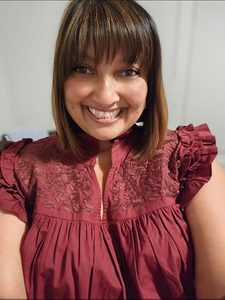
Tell us a little about your background (personal, professional etc.) and your journey with ALK-positive lung cancer so far.
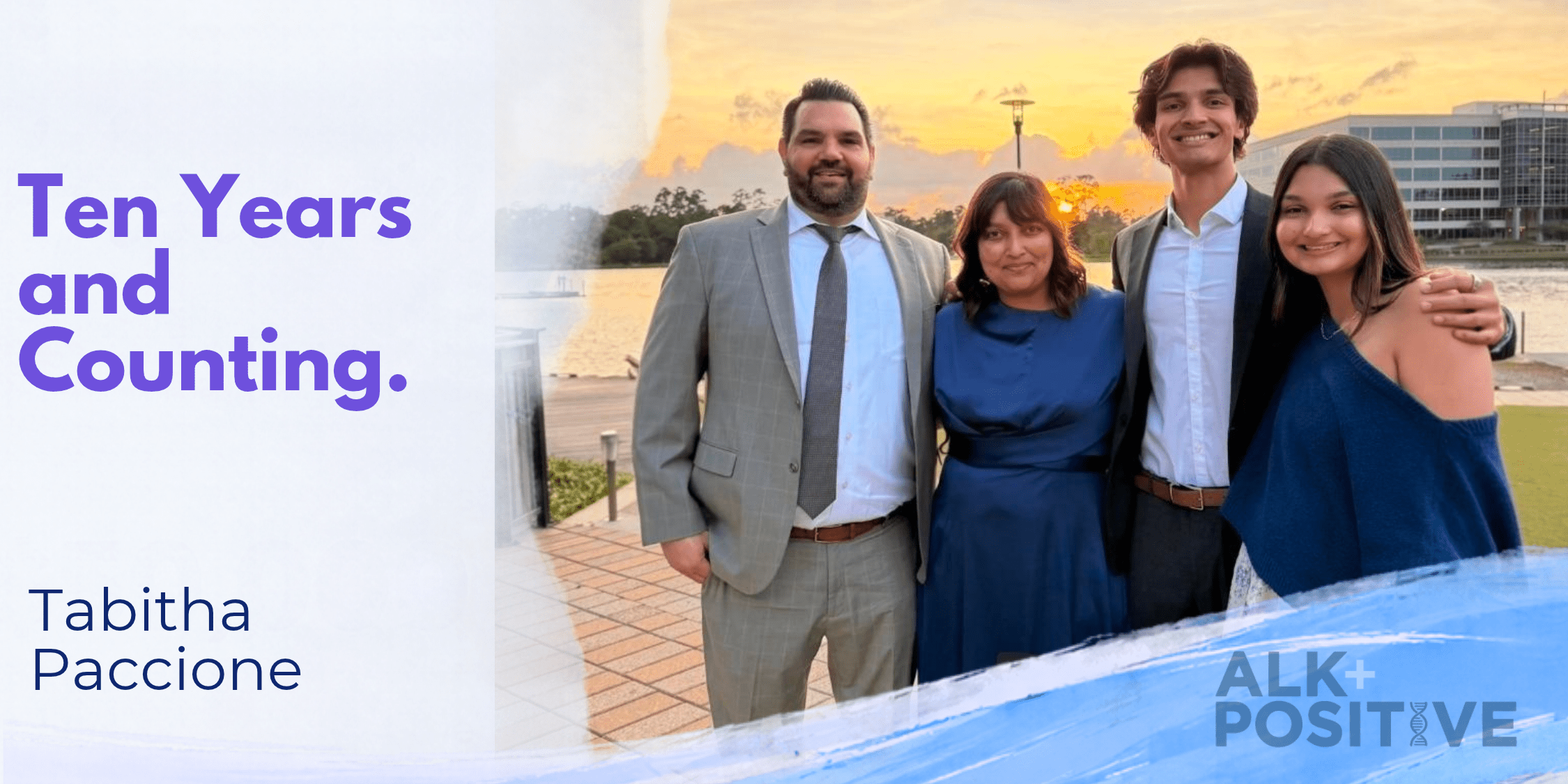
I’m a wife and mom of two who was diagnosed with stage IV ALK-positive lung cancer in 2016, at just 35 years old. Originally from California, where I was diagnosed, I now call Texas home.
At the time of my diagnosis, I was a teacher raising my 12-year-old son and 8-year-old daughter while living what I considered a very healthy, active life. I ate healthy, worked out regularly, and enjoyed running 5Ks and 10Ks, so lung cancer was never something I imagined I would face. It all started with a cough that just wouldn’t go away. Unfortunately, I was misdiagnosed several times along the way because no one thought a young, healthy, active mom like me could have stage IV lung cancer. By the time I was diagnosed, the cancer had spread throughout my body, to my lungs, liver, bones, lymph nodes, and brain. I started chemotherapy, and my prognosis was not good. It was a frightening time, especially as a mom with two young children who needed me. Thankfully, biomarker testing identified my ALK mutation and opened the door to targeted therapy. The difference was incredible. I went from chemotherapy to taking a pill twice a day, along with two rounds of stereotactic radiation to treat cancer in my brain.
I’ve been on two targeted therapies over the past 10 years, the first for about a year and my current treatment (Alectinib) for the last nine years. While there are still side effects, my quality of life has been so much better, and I’m incredibly grateful for the treatment options that have allowed me to keep living my life.
Over the years, my life has changed in so many ways. I transitioned from teaching into a corporate career, watched my children grow up, and experienced moments I once wasn’t sure I would get to see.
What do you know now that you wish you knew when you were first diagnosed? What would you advise a newly diagnosed patient?
Looking back, I wish I had known how important biomarker testing was and that there were treatment options beyond chemotherapy. When I was first diagnosed, I knew very little about lung cancer, and I certainly didn’t understand how identifying a specific mutation could open the door to a treatment that could change my life.
I also wish I had known that a stage IV diagnosis didn’t mean I couldn’t have more time. Ten years later, I’m living proof that there can be hope even when the prognosis feels impossible.
My advice to someone newly diagnosed is to take a breath, ask questions, and make sure you have a team that listens to you and understands your specific type of lung cancer. Ask about biomarker testing and whether targeted therapy or clinical trials may be options for you. Don’t be afraid to seek a second opinion and connect with others who understand what you’re going through. You don’t have to navigate this journey alone. There are several wonderful foundations and support groups, including ALK+ Positive, that can help you navigate this journey, find reliable information, connect with other patients, and remind you that you aren’t alone. I wish I had known about these resources earlier in my own journey because having a community that understands what you’re going through can make such a difference.
Most importantly, give yourself permission to feel everything you’re feeling. A cancer diagnosis is overwhelming, and you don’t have to figure everything out at once. Hold onto hope, lean on your support system, and take things one day at a time. I know firsthand how terrifying this journey can be, but I also know how much can change with advances in research and treatment. Ten years ago, I couldn’t imagine being here today. I hope my story reminds others that their diagnosis is part of their story, but it doesn’t have to define their future.
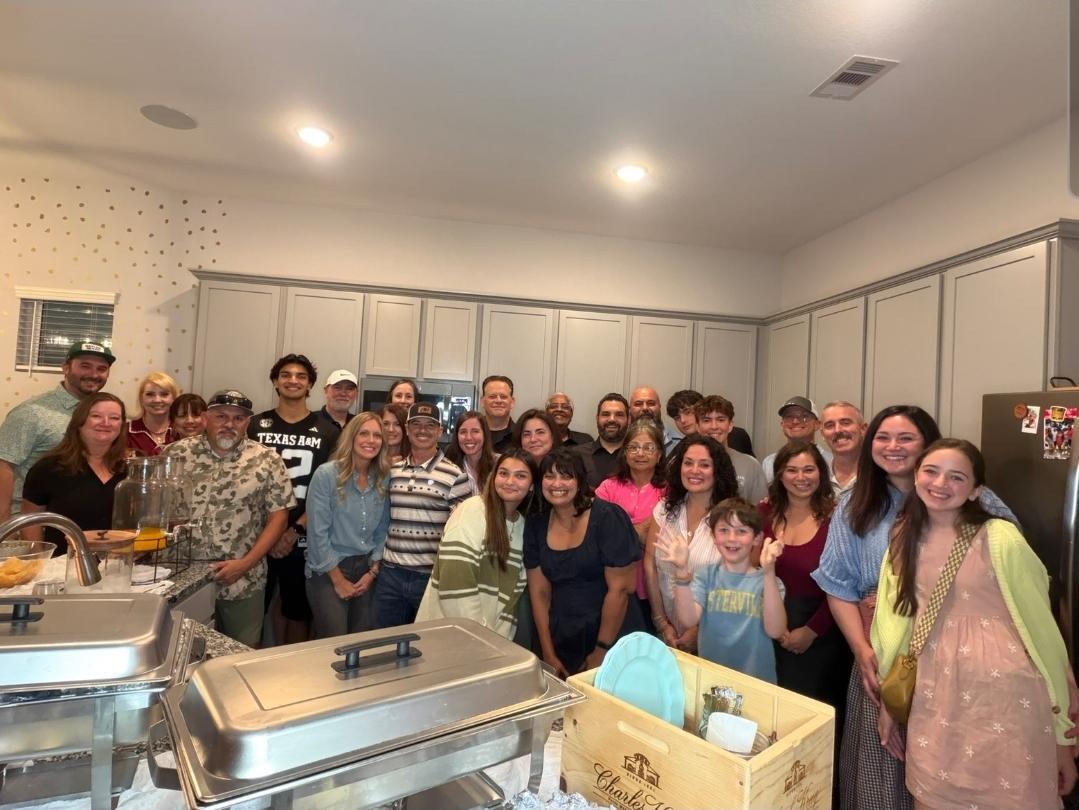
You recently celebrated 10 years since your diagnosis – a big milestone! What has kept you grounded all these years, and what has helped you keep going, keep hoping, and keep thriving despite a diagnosis of this magnitude?
My faith in God and my family have been my anchors over these last 10 years. When I was diagnosed, my children were just 12 and 8, and I remember thinking about all the things I might never get to see. I had this slideshow playing in my mind of everything cancer might steal from me—watching my children grow up, seeing them graduate, celebrating their milestones, and being there for the everyday moments. I was told I might only have a few months, and the thought of leaving my children was heartbreaking.
Today, I get to look at them and see how far they’ve come, and it’s hard to put into words what it means to still be here for these moments. These are the moments I once feared I would never have, and I will never take them for granted. My faith has carried me through the uncertainty, reminding me that even when I couldn’t see a future for myself, God was still there. That doesn’t mean the journey has been easy. There are still side effects, scan anxiety, and days when the weight of living with stage IV cancer feels heavy. But I’ve learned that hope isn’t about knowing what tomorrow holds; it’s about choosing to live fully today.
Finding the lung cancer community has also been such a gift. For a long time, I didn’t know anyone else who understood what I was going through. Connecting with people who truly get it has reminded me that I don’t have to walk this road alone. I’m grateful for the research and targeted therapies that have given me more time, for the people who have stood beside me, and for the chance to turn my experience into hope for someone else.
Ten years ago, I was trying to process the possibility that I might not have much time left. Today, I’m celebrating a decade of life I never thought I’d have. I believe that time is a gift from God, and I want to use it to love my family deeply, encourage others, and remind those facing this diagnosis that there can be hope, even when the future feels impossible to imagine.
You’ve been an active advocate in the lung cancer community for years. What inspires you to be involved, and what would you advise someone who may also want to be involved in advocacy but doesn’t know where to begin?
What inspires me to be involved in the lung cancer community is knowing that there are people facing the same fear and uncertainty I felt when I was first diagnosed. I was 35 years old, a wife and mom of two, and I knew very little about lung cancer, biomarker testing, or the treatment options that could be available to me. I was told I might only have a few months, and I never imagined I would be here 10 years later. The research and targeted therapies that gave me more time changed my life, and I want others to have access to that same hope.
I also want to share my story to help change the face of lung cancer. Lung cancer isn’t what many people think it is, and the truth is that anyone with lungs can get lung cancer. I want people to understand that it can happen to young, healthy, active people, too. We need more awareness, more research, more funding, and ultimately, more time for patients and their families. Every person deserves the chance to access the testing and treatments that could change their story. For quite some time, I felt alone on this journey because I didn’t know anyone who truly understood what I was going through. Finding my lung cancer community, especially through foundations like ALK+ Positive, helped me realize I wasn’t alone.
Now, I want to be that person for someone else to remind them that there is a community ready to walk alongside them, that their story matters, and that a stage IV diagnosis doesn’t mean they have to give up hope. My faith in God has also shaped my desire to use the life I’ve been given to encourage others and bring awareness to a disease that is still so misunderstood.
My advice to someone who wants to get involved but doesn’t know where to start is to start with your own story and what matters to you. You don’t have to be an expert or a public speaker to make a difference. You can start by connecting with an organization like LUNGevity, joining a support group, sharing your experience, attending an event, or simply reaching out to someone who is newly diagnosed. Advocacy can look different for everyone, and even the smallest act of showing up can mean so much to someone who feels alone. You never know how sharing your story might change someone else’s life. For me, advocacy is about turning something incredibly difficult into an opportunity to give others hope, change perceptions, and help move research forward.
There have been many developments in research and clinical practice in the 10 years since you were diagnosed. There are now many more options for ALK patients than there used to be even a few short years ago. What makes you most excited and hopeful about this research and the future of ALK-positive cancer?
When I was diagnosed 10 years ago, there were only a couple of treatment options—or what I like to think of as lily pads—for someone with my ALK genetic mutation. I often think of this journey as floating along on the water, living life while trusting that when one treatment stops working, another lily pad will be there for me to hop onto. When I was first diagnosed, there were so few lily pads to choose from, and that was a frightening reality to face. But today, as I talk with my medical team and learn about the advances in research, I see so many more lily pads ahead. That gives me incredible hope. Each new treatment option represents another opportunity, another chance to keep going, and more time to live my life with my family. I know there are still uncertainties, but I’m hopeful that as research continues, even more lily pads will appear along the way. My prayer is that I’ll have many more to hop to, allowing me to keep floating along and enjoying this beautiful life for many years to come.
What makes me most hopeful is knowing that research continues to create possibilities that didn’t exist when I was diagnosed. Biomarker testing identified my ALK mutation and opened the door to targeted therapy that changed the course of my life. I’m living proof of what research can make possible, and I’m so grateful for the scientists, researchers, and medical teams who continue working to give patients more options. I’m especially encouraged by the growing number of treatments for ALK-positive lung cancer and the ongoing work to help patients live longer with a better quality of life. These advances don’t just affect the person receiving treatment; they give families more birthdays, graduations, milestones, and everyday moments together. I hope research will continue to bring new options for patients whose treatments stop working, help overcome resistance, and move us closer to making lung cancer a manageable, long-term disease for more people. But we can’t slow down now. We need continued research, funding, and access to biomarker testing so every patient has the opportunity to find the treatment that may work for them.
Ten years ago, I never imagined I would be here today. I’m incredibly grateful for how far we’ve come, and I’m hopeful for the patients being diagnosed today and those who will come after us. I hope they’ll have even more lily pads ahead of them and the chance to keep floating along, living their beautiful lives for many, many more years.