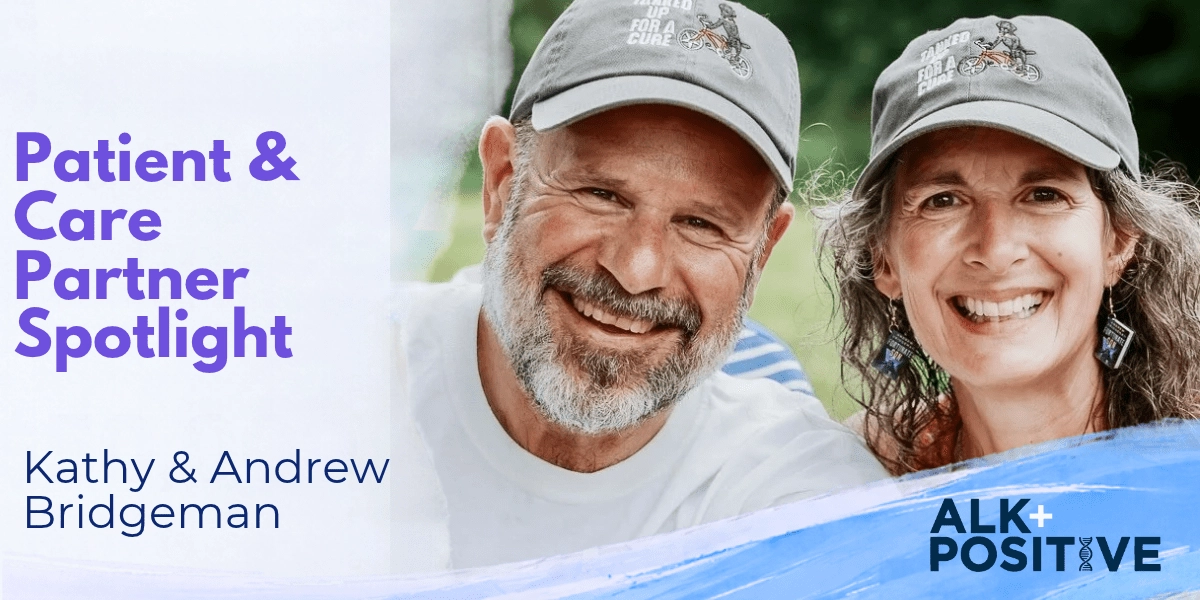
Interview with Kathy and Andrew
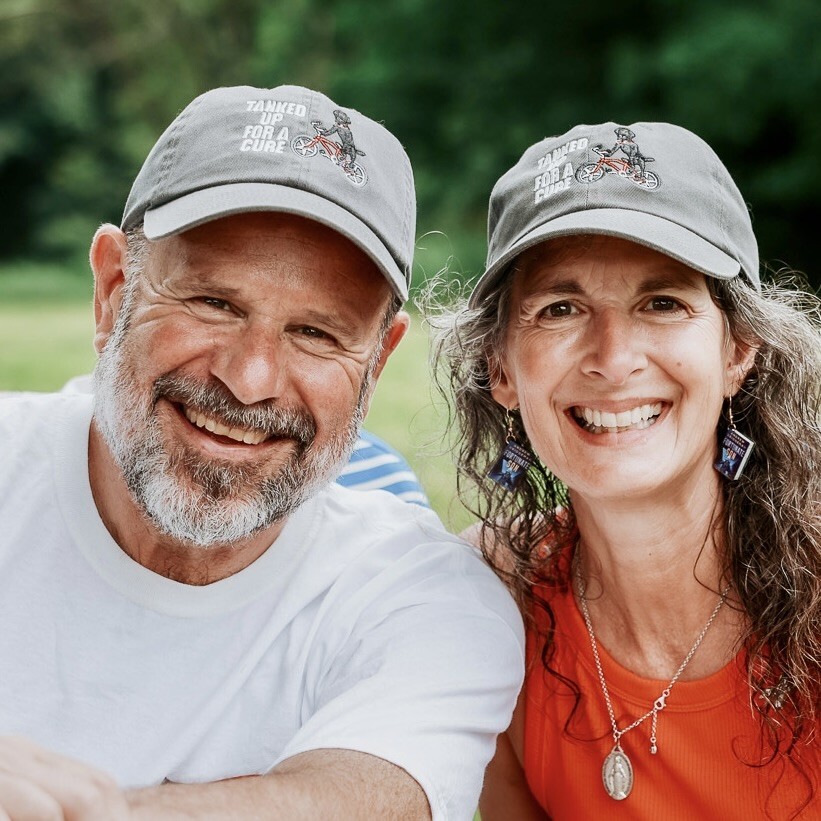
Tell us a little about yourselves, Kathy’s journey with ALK-positive lung cancer, and Andy’s experience as a spouse-caregiver.
We met in a bar in Peoria, Illinois. Andy says he fell in love the moment Kathy walked in. Then she approached, out of the blue. It was a wonderful moment for him—until he realized she had only introduced herself with hopes of dating his roommate.
We’ve been married for 34 years, have two grown children and two grandchildren, and live in New Hampshire with our Australian shepherd, Duncan. Kathy built and ran an insurance agency despite Andy’s self-admitted negligence as a business partner. Andy is an internationally published author of the Emma Noble thriller series—a career that began because Kathy encouraged him to “go write me a book.”
We love to travel, hike, and sit in quiet places and reflect. Kathy loves being in nature and learning about nature. She also loves to line up dead things she finds in nature on the windowsill so she can watch them rot above the sink. Andy does not share this pastime.
Kathy’s superpower is being a supporting force for the people she loves. She believes in us—sees things we don’t recognize in ourselves and finds a way to make us believe it too. It is an extraordinary ability to wield that kind of love.
In March 2026, we were preparing for a family trip to Sicily when sharp chest pain sent Kathy to the ER. She was 56, active, and a never-smoker. Doctors found COVID, pneumonia, and a tumor in her lung. Further testing showed that the cancer had spread to her bones.
We were blindsided. While we waited for biomarker results, we started what Kathy called our “Coffee & Cry” mornings. We listened to music, talked about our life together, laughed, and cried. We’ve always been best friends, but we’d never been closer.
Learning that Kathy was ALK-positive gave us a treatment option and hope. She started lorlatinib in April. Today, she feels as good as ever. Her latest PET scan showed only one small, pea-sized area of faint activity in her lung that the radiologist believes is inflammation. Everything else that had lit up was dark.
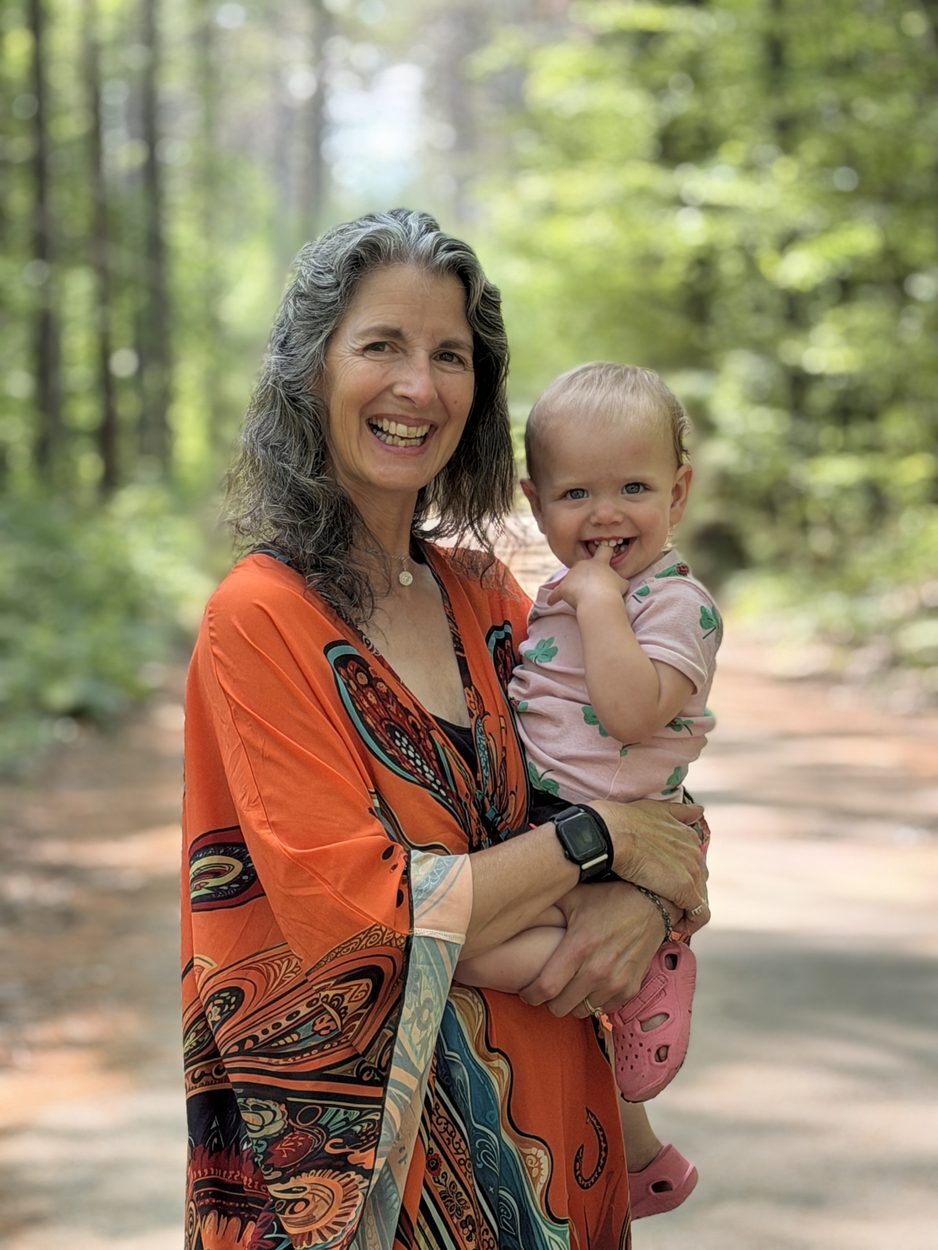
In August, she held our grandson, Enzo—the little boy she’d been afraid she wouldn’t live to meet.
For Andy, the hardest part has been the powerlessness. At diagnosis, Kathy was incredibly strong. Andy was a puddle. The roles shifted when the ALK-positive diagnosis arrived. Kathy could unclench her fists, and Andy had some time to put on his armor. He knows he can’t make her cancer better. What he can do is be there. Ups and downs.
What do you know now that you wish you knew when Kathy was first diagnosed? What would you advise a newly diagnosed ALK patient and their family or caregivers?
We wish we’d understood how much we didn’t yet know. When we heard “stage IV” and “in the bones,” we thought we knew what came next. Kathy could feel her body deteriorating. Waiting for answers was brutal. We called an attorney and began putting our affairs in order.
The biomarker results changed her treatment options and what we could imagine for our future.
We’d encourage people to ask questions, understand what testing is underway, and connect with others who know this disease. Meeting people who had lived with ALK-positive lung cancer for ten years or more gave us something statistics couldn’t. We could look at someone and think, “That could be us.”
Kathy also wants newly diagnosed patients to hear this: “It’s not your fault. You didn’t do anything wrong.”
For caregivers, you don’t need perfect words or a convincing performance of being strong. We cried together. We still do sometimes. Being there matters.
What inspired you to fundraise for ALK Positive, Inc., and what advice would you give someone who doesn’t know where to start?
Our reason was personal. Kathy is here because of advances made possible by researchers, patients who participated in trials, and people who supported that work. They gave us what we needed most: time and hope. Of course we want to pay that forward and help the people working toward a cure.
Andy had books and a community of readers. For June, July, and August, he pledged everything he received from sales of his books and audiobooks to ALK Positive. We also invited readers to donate directly.
Our advice is to start with what you have—a skill, a business, a group of friends. Tell people why this matters to you and give them a straightforward way to help. Sharing our story brought an outpouring of kindness. Giving people a way to act on that kindness felt like a natural next step.
Tell us about your experience at the ALK Summit in Washington, DC, and how it impacted you both.
We arrived carrying a lot of fear. Even with treatment working, there was a feeling that we needed to hurry—to fit everything in while we could.
When we imagined a convention of stage IV lung cancer patients it was not what we saw in the hotel lobby. What greeted us was laughter, joy, and community. Looking around, we often couldn’t tell who had cancer and who was a caregiver. That evening, Kathy was line dancing with her new friends while Andy smiled from the corner.
Make no mistake. The ALK positive community is a not just a group of people with cancer in common. It is a community of friends. We were embraced immediately and we will always be grateful for that.
We met folks who had lived with this disease for a decade or more. Some had helped build the very community they’d needed when they were first diagnosed. We spent a lot of time thanking people and hugging them.
We also noticed something beneath the laughter: a calmness. These veteran patients understood the stakes. They’d been through frightening things, but they were living in the good moments. We had a lot to learn from them. For instance, some described scans as simply data points. Not the quarterly march through hellish anxiety that we’d been making them out to be. We’re not there yet but it helped.
On the flight home, we held hands. Kathy talked about how much peace she felt and how much less alone.
Nothing had changed medically that weekend. But something changed for both of us. Life felt more abundant. Less scarce.
What are you most hopeful about when it comes to the funds you’ve raised?
We want a cure. Plain and simple.
We’re grateful for the medication working for Kathy today. But we want a future where she—and everyone living with this disease—doesn’t have cancer hanging over them.
That’s what we hope these funds help move us toward. We want more years together, more ordinary days, and the chance to watch our grandchildren grow up. And we want that for the families we’ve met along the way.
How do you approach living with lung cancer and staying positive day to day?
Learning Kathy was ALK-positive felt like walking away from a plane crash. Then came the realization that we were being told: “Congratulations. Go play in the road.” We’d escaped one terror, but there was still danger.
We’re not veterans yet, but we’re not rookies anymore either. The medication is working. We have much more hope than we did.
That doesn’t mean fear doesn’t creep in. It does. We deal with whatever form it takes.
That’s much of Andy’s role as caregiver—or sidekick—now. He listens. He reminds Kathy that we’re in what we call “bonus time.” We’re here together. Let’s not sweat the small stuff.
We don’t stay positive every minute. We have good days and fearful moments. But we have a life together, and we want to enjoy it.
Beyond taking medication, are there things you feel have benefited you?
Kathy loves nature walks, foraging for mushrooms, sound baths, and lifting weights. They’re things she enjoys that help her feel good.
And we love walking hand in hand down our quiet dirt lane while our dog, Duncan, sniffs and shits.
There’s a lot to be said for that kind of normal.