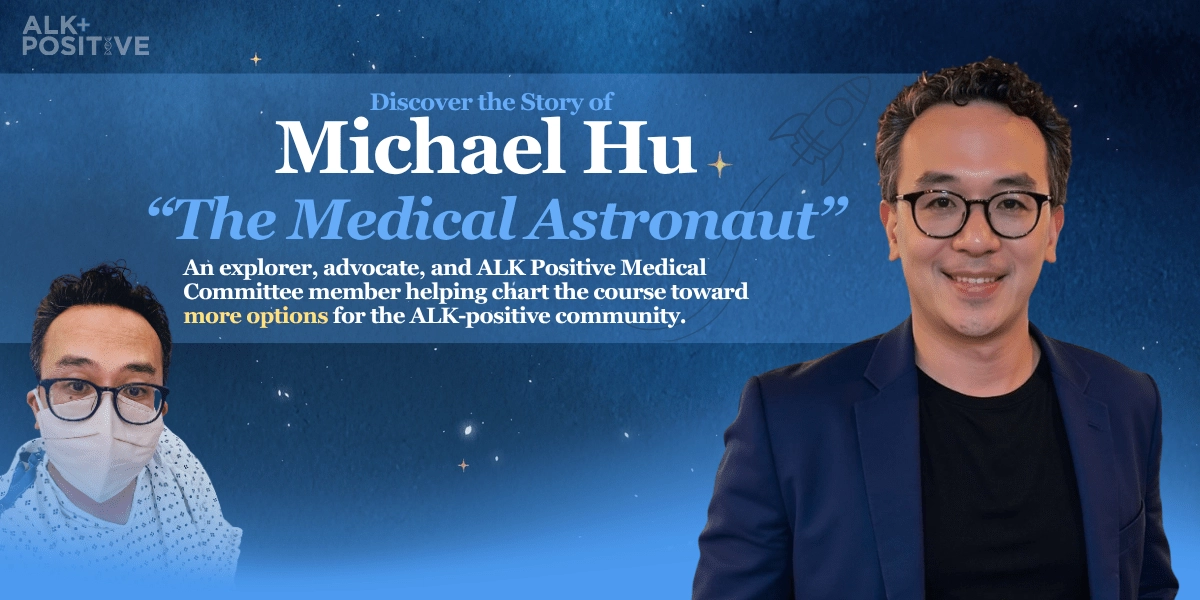
On March 17, 2022, Michael Hu’s life divided into before and after. He was 43 years old, a former biomedical research scientist turned engineering project manager, and the father of two young kids. The diagnosis was ALK-positive lung cancer.
What followed has been four years of progressions, treatment pivots, clinical data deep-dives, and a growing role in the ALK Positive community — as a Summit attendee, a medical committee member, and now, as someone whose case has helped guide treatment decisions for other patients. Through all of it, Michael has held onto something he describes as the most important thing a patient can find: a care team he trusts, and the belief that another option is always somewhere ahead.
We sat down with Michael during ALK-positive Awareness Month to talk about what it means to follow the science, what hope actually looks like in practice, and what he wants other patients to know.
Many patients rely on their care team to guide treatment decisions, but you have also taken an active role in following the science, understanding emerging research, and exploring new options. What inspired you to take that approach, and how has it shaped your journey?
I think this approach really comes from how my life has shaped me. I spent much of my career as a biomedical research scientist and later as an engineering project manager, so when I’m faced with a serious problem, it’s hard for me to step back until I feel like I’ve explored every possible option. I naturally want to understand the situation, make a plan, and see it through. I’ve always struggled with unknowns — especially when reducing those unknowns could impact something as important as how long I live.
So in my cancer journey, that’s meant trying to deeply understand my disease and staying on top of what treatment options exist now and what may be coming next. Even though it’s been over 20 years since I worked as a scientist, that background has been incredibly helpful. It allows me to read and interpret research papers and better understand how these drugs actually work.
I realize not every patient has that advantage, but it has played a significant role in my journey — especially as I’ve had multiple progressions since my diagnosis in 2022. One example is when I developed a double ALK mutation with my third progression. There was very little clinical data on what actually works in patients. So I turned to lab data and used that to help guide my thinking, brought it to my care team, and we decided to try a new direction together. My first scan showed a strong response. It was a bit of a gamble — but it worked. And knowing that my case has helped at least one other patient since then means a lot to me.
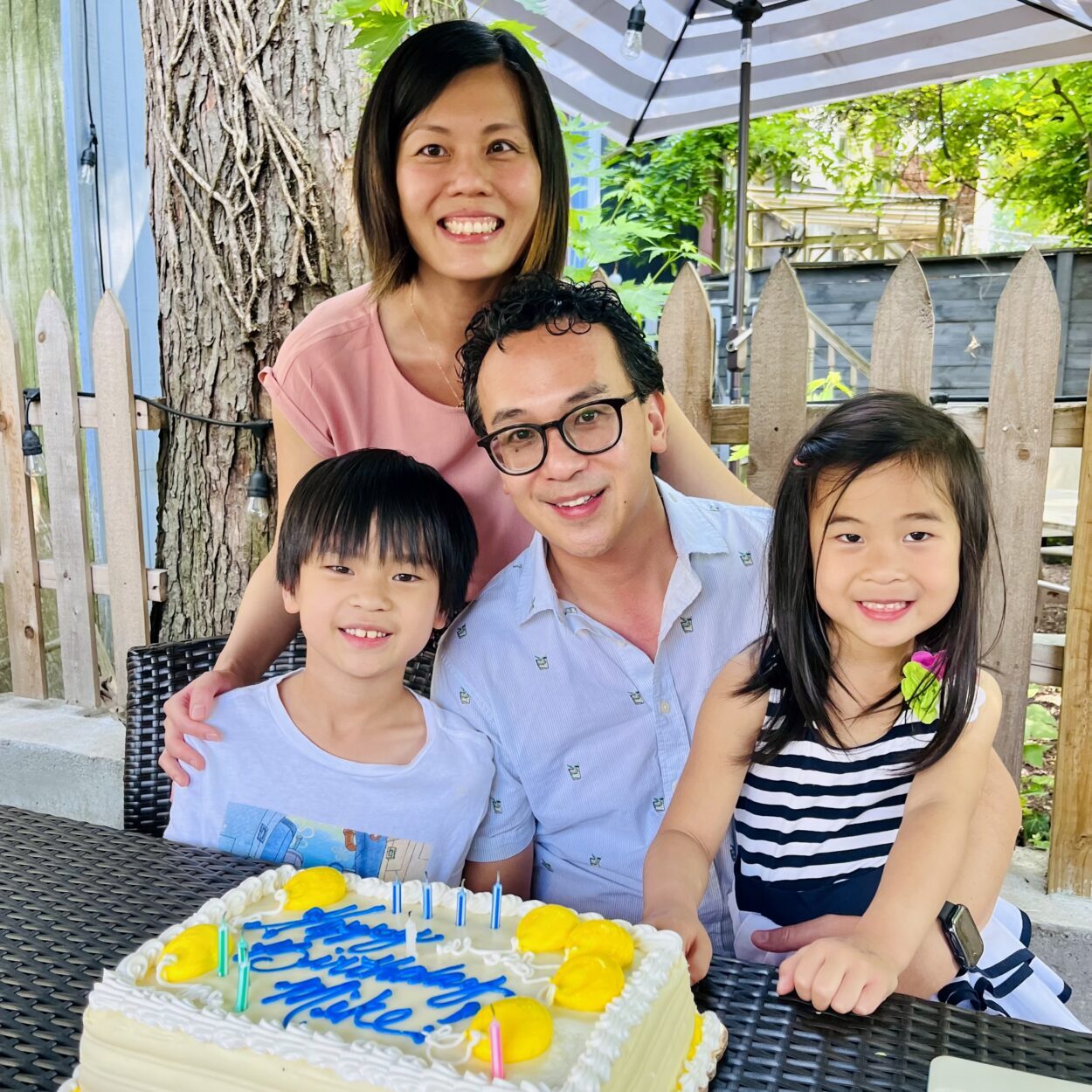
Michael’s 44th birthday celebration with his family, two months after his diagnosis.
As you have navigated different treatment options and clinical trials, what has it felt like to follow the science in search of the next possibility? Has that process changed the way you think about hope, advocacy, or your future?
Following the science has been a mix of emotions. On one hand, it’s incredibly comforting and even exciting to know how many researchers, doctors, and companies are working to develop better treatments for ALK patients. There’s real progress happening. But at the same time, it can be very hard emotionally, even agonizing. Sometimes it feels like the breakthroughs are just out of reach — like they might come, just not in time for me.
Living with that “hurry up and wait” reality is tough, especially when I’ve had to switch treatments about once a year. I do worry about running out of options, and that’s part of why I advocate for more research funding. We need to keep the momentum going.
Being diagnosed at 43, I’m part of this growing group of “young” cancer patients living with advanced disease longer — but still without a cure. I want to see my kids grow up, graduate, and build their own lives. To have a real shot at that, we need more than what exists today.
“I often describe research and clinical trials as beacons of hope. They’re what light the path ahead for me. Even during progression, they remind me this isn’t the end — there’s still somewhere to go, something else to try. As long as I can see options ahead of me, I can hold on to hope.”
-Michael Hu
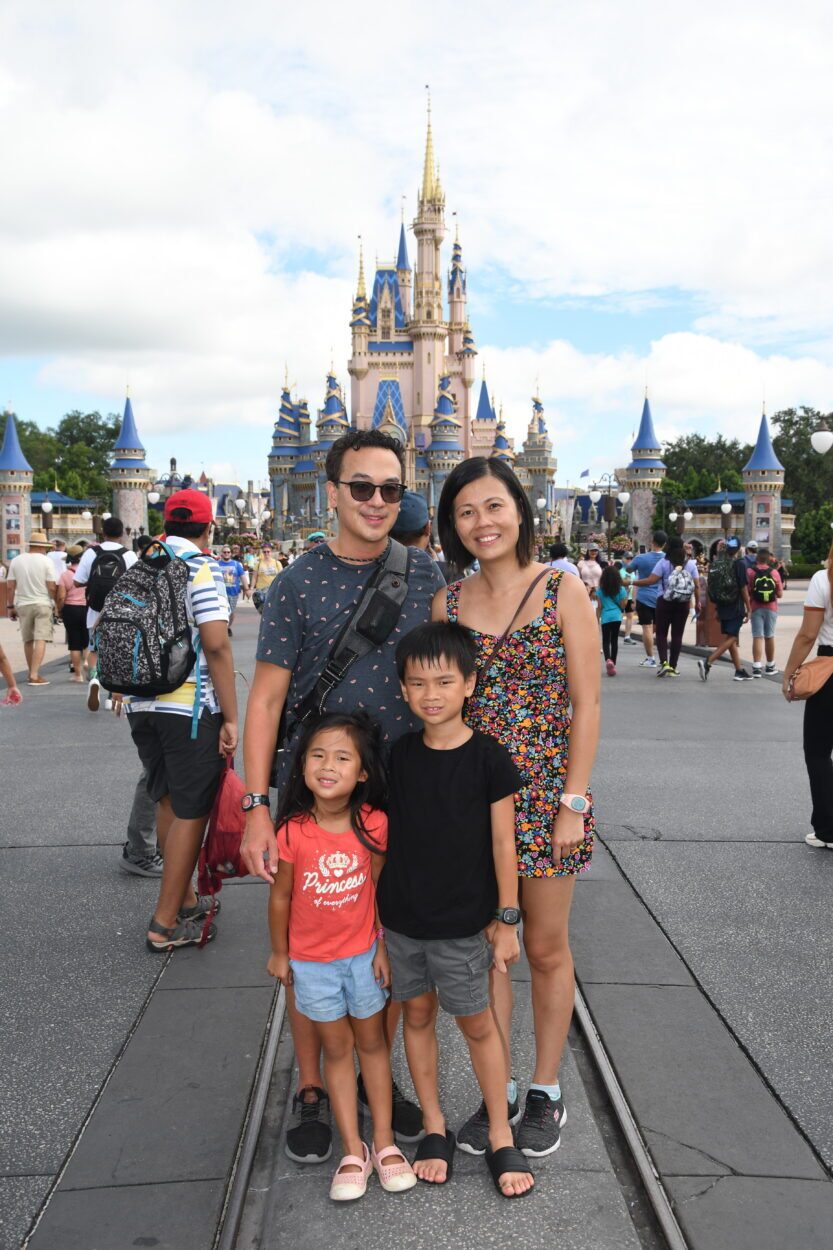
Michael and his family at Disney World, five months after his diagnosis.
Looking back, what have you learned about the value of being an informed and engaged patient? And what would you say to someone who may feel overwhelmed by trying to understand all of the options available to them?
For me, being informed and engaged has been incredibly valuable, especially when making treatment decisions. But I also want to be very clear — being informed doesn’t mean you have to do this alone, or that you’re expected to become an expert. I don’t replace my care team — I’m part of it. I rely on them deeply, and the goal of educating myself is simply to be a stronger, more effective part of that team.
That said, I’ve still had to advocate for myself — asking for tests, raising concerns, and bringing forward options. Staying informed has helped me do that with more confidence. But not every patient needs to take the same approach I did. What matters most is building a care team you trust and leaning on them.
“And beyond that, I really encourage people to connect with the ALK community in whatever way feels right for them. You don’t have to figure everything out at once. None of us do. This is something we learn little by little, together.”
-Michael Hu
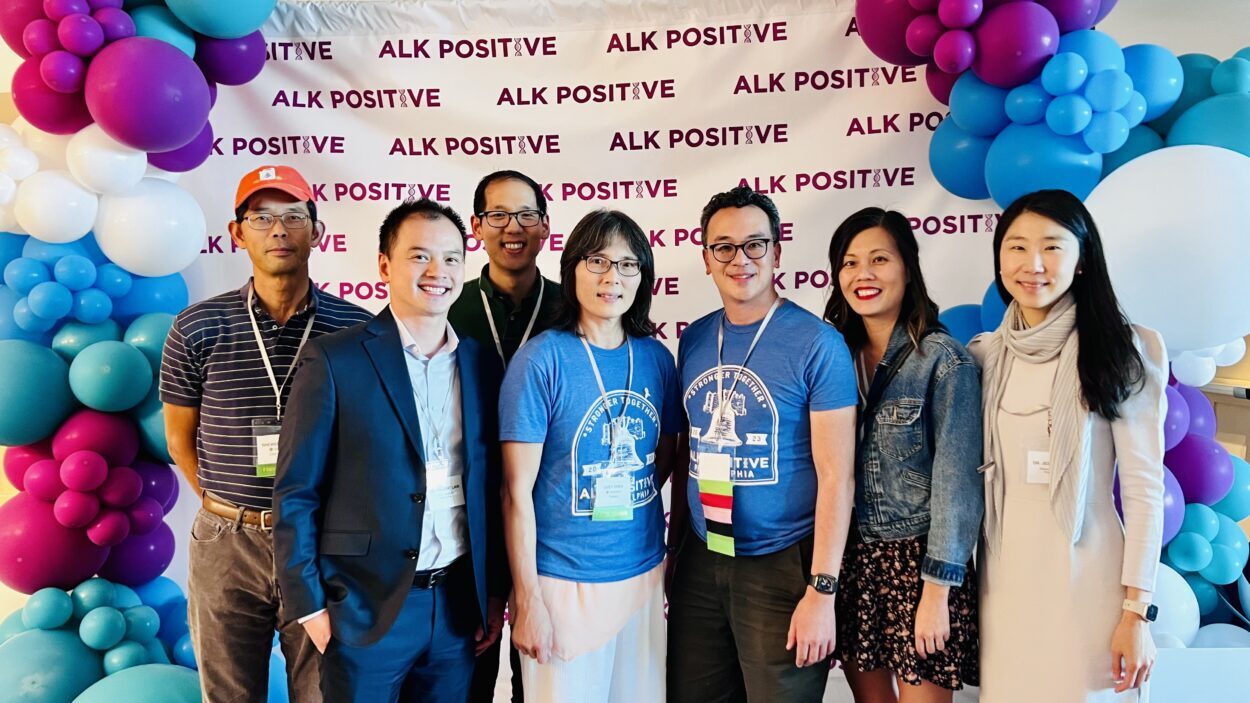
At the ALK+ Summit in Philadelphia with Yin, ALK family, and Drs. Lam and Lin.
How have exploring different treatment options, participating in research, and serving on the Medical Committee shaped your perspective on the future of ALK-positive cancer — and the importance of creating more options for patients?
Looking back, it’s amazing to see how much I’ve learned since my diagnosis in 2022 — not just from my own experience, but also from being part of this community and working alongside others on the medical committees. What stands out most to me is how many people are working every day to improve outcomes for ALK patients — researchers, clinicians, advocates, and industry teams. That gives me a lot of hope.
But it also reminds me how much more needs to be done. We still have gaps in access, in treatment options, and in global availability. Progress only matters if patients can actually reach it. So we need more — more research, more funding, more focus on getting treatments to patients everywhere.
“For patients like me, options aren’t just options — they’re time. And I truly believe in this community. If you’re an ALK patient, you are not alone in this. You’re part of something incredibly strong. And there is real reason to have hope.”
-Michael Hu
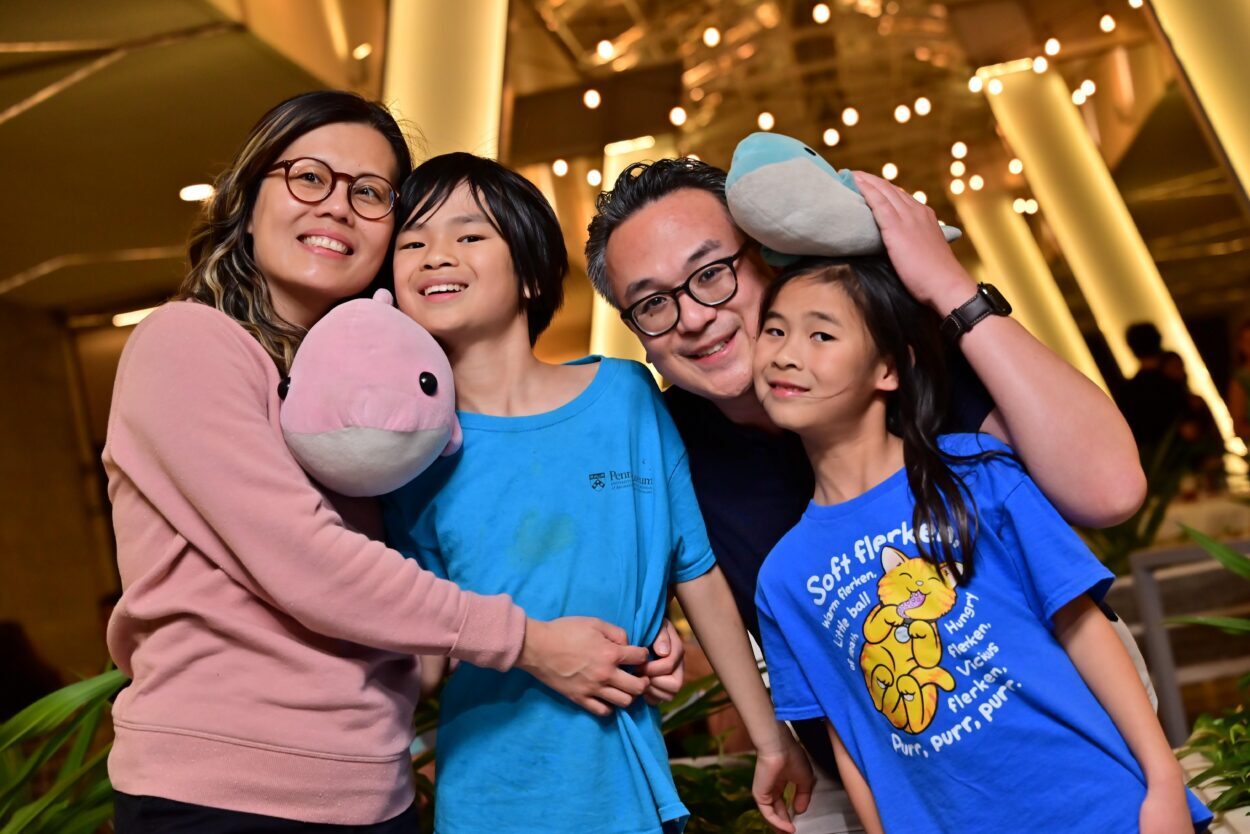
Michael’s story is one of courage, precision, and the kind of hope that has to be actively maintained. He is not waiting for a cure to arrive — he is working toward it, alongside his care team, this community, and every researcher and donor who believes that more options mean more time with his family.