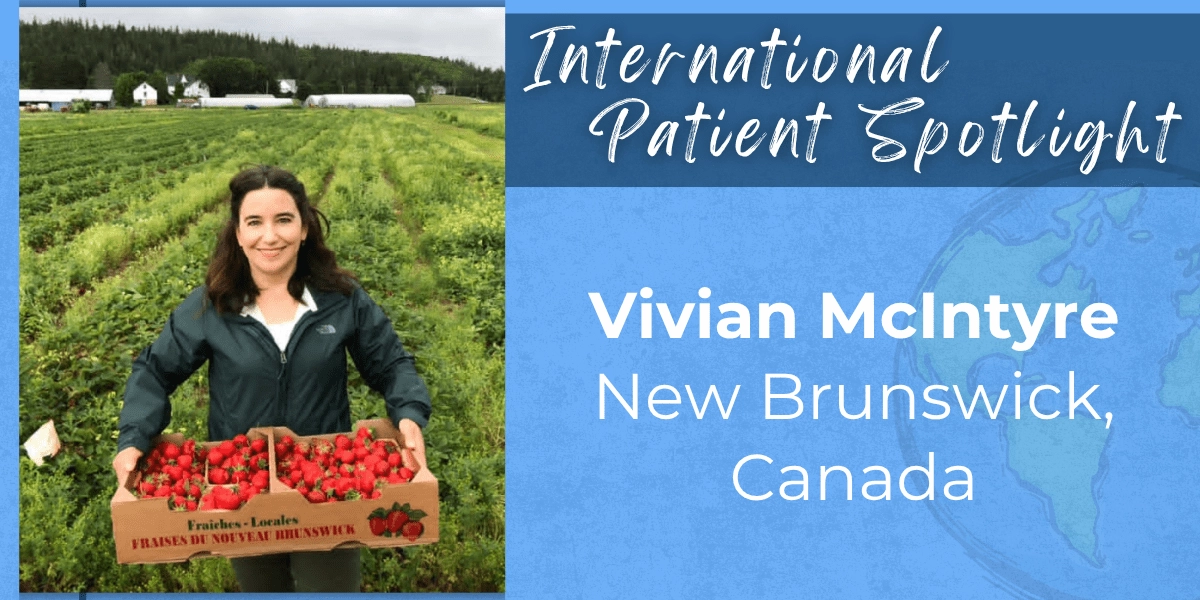
Interview with Vivian McIntyre
Interview by: Duncan Preece
Tell us a little about yourself – your personal and professional background, as well as your journey with ALK+ lung cancer so far.
Before my 2019 diagnosis, I lived in Alberta, Canada, where I worked as a Medical Laboratory Technologist for a national organization. I tested donated blood and blood products, enjoying the precision and problem-solving that supported patient care behind the scenes. I thought I would stay in that role until retirement.
My husband and I lived in a downtown condo in a large city, and we had made a home there.
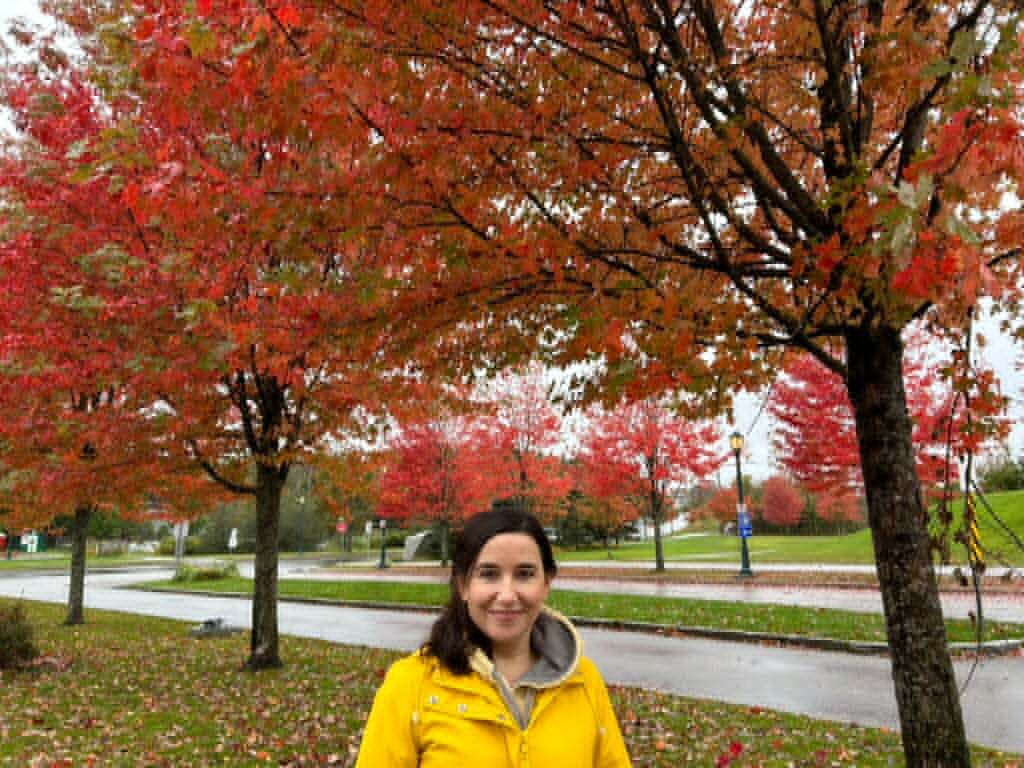
How did your experience with ALK-positive lung cancer begin?
It started during travel in 2017, when I had a severe allergic reaction to tree pollen with sneezing, burning eyes, and hives from head to toe. It was something completely new for me. After returning home, I noticed an intermittent high-pitched squeak when I inhaled, like a small “dog toy” sound. It was initially treated as possible asthma, and despite trying various asthma inhalers and undergoing tests over the next two years, it persisted.
In 2019, after an international trip with a very long flying time, I developed severe back pain shortly after getting home. I assumed the travel had triggered it. The pain worsened and didn’t respond to conservative treatments like massage and physiotherapy. A chest X-ray suggested pneumonia, even though I had no respiratory symptoms, and antibiotics didn’t help.
Six weeks later, after ongoing efforts to find relief, the pain started to limit my daily activities. I went to urgent care alone before my work shift, expecting another X-ray, but I was sent for a CT scan instead. The doctor told me it looked like cancer in my lungs and spine, with suspected spinal fractures. As someone who worked in diagnostics, I was confused by how definitive that sounded before any biopsy confirmation. Further tests confirmed Stage IV ALK-positive lung cancer, which had already spread to my spine.
Shortly after, a doctor gave me an 18-month survival estimate. It wasn’t based on the latest evidence, but it stayed with me, shaped how I thought about the future, and influenced my decision to move back to New Brunswick, where I grew up, for family support.
After your diagnosis, what treatment did you start?
I began targeted therapy with Alectinib, which I have taken ever since. Early on, a major side effect was low albumin levels, which made it harder to tolerate treatment and find the right dosage. My oncologist didn’t immediately reduce the dose and seemed unsure how to manage it, but it was eventually adjusted.
I haven’t changed my diet, added supplements, or had any other treatments, just the TKI. I do sleep and rest more now. Over time, some early symptoms, like the breathing squeak and spine pain, gradually resolved. I’m keenly aware that not everyone experiences the same outcome, and I hope research will make it possible for every patient to have a long and stable response to treatment.
How did you begin to connect with the broader ALK-positive community?
For about two years after diagnosis, I avoided learning about ALK-positive lung cancer. I didn’t research or look for information, and I asked others not to share what they were reading about ALK with me. It was completely out of character for me, and I still don’t know why I reacted that way.
That began to change in 2021, when a friend encouraged me to join Facebook to access the international ALK Positive Facebook group. It was my first exposure to a larger community of people living with the same diagnosis, and it shifted my perspective.
How would you describe the ways your life has changed since your diagnosis?
After joining the international ALK Positive Facebook group, I became involved in the Canadian ALK Positive Facebook support group and eventually became an admin. In 2024, I joined a team to help create the ALK Positive Canada organization, aimed at obtaining charitable status. I am currently the secretary, focusing on ensuring access to clear, relevant, and accurate information.
I don’t really think of myself as an advocate in a formal sense. It was unexpected, since I’ve always been more comfortable working behind the scenes than in anything public-facing.
What makes you most hopeful about the future for ALK patients?
Overall, I would describe it as a reorientation rather than a reinvention. It’s been a complete shift in how I see my life and priorities. I went from a structured career path to a more uncertain life, focused on day-to-day living. I also moved from downtown living in Western Canada, near the Rockies, to a quiet suburban home surrounded by forest and
beaches in Eastern Canada, and along the way discovered that I really enjoy micro gardening, an interest I never would have known otherwise.
Being part of the ALK community has been meaningful but also difficult at times, as connections form quickly and loss is felt deeply. I worry less about what I can’t control and focus more on what’s in front of me. A line from Mary Oliver’s poem The Summer Day has stayed with me: “Tell me, what is it you plan to do with your one wild and precious life?”
Interview by Duncan Preece