Phase Ib Study of NXP900 With Lorlatinib in ALK+ Lung Cancer Sponsored by Nuvectis Pharma, Inc. Blocking ALK Cancer’s Backup Route.
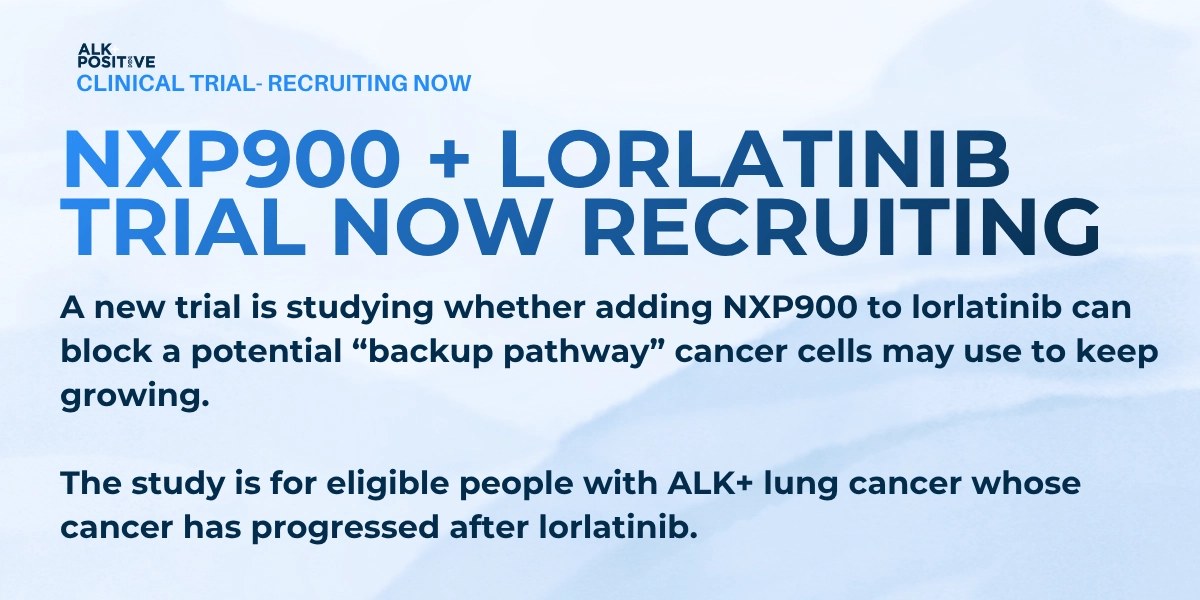
ALK-positive lung cancer cells can eventually find ways around an ALK drug such as lorlatinib. ALK is the cancer cell’s main growth switch, and Lorlatinib turns that switch off. But some cancer cells can turn on a backup system, called a bypass pathway, that allows them to keep growing. One of these backup systems involves proteins called SRC and YES1. These proteins pass cancer growth and survival signals into the cancer cell and can activate another protein called YAP1, which helps cancer cells survive, multiply, and become resistant to treatment. NXP900 is designed to block SRC and YES1. In the NXP900 + lorlatinib trial (NCT07784959) lorlatinib shuts down ALK, while NXP900 shuts down one of the cancer’s potential escape routes. Laboratory studies are encouraging: NXP900 has been active against ALK-resistant cancer cells and has worked particularly well when combined with lorlatinib, including in models that had become resistant to lorlatinib. If it works in patients, it could represent a new way of treating ALK resistance by blocking ALK and the cancer’s backup pathways at the same time. The key unanswered question is whether SRC/YES1 dependence is sufficiently common in human ALK-resistant tumors to produce meaningful systemic, and ultimately CNS, responses.
Inclusion Criteria
Patient must have received lorlatinib as a first or second line TKI. One prior line of systemic chemotherapy is permitted.
Exclusion Criteria
Known single or compound ALK domain mutations that cause resistance to lorlatinib, or known actionable oncogenic driver alterations other than ALK with approved targeted therapies available, such as, MET or EGFR mutations or HER2 overexpression. In other words, if an ALK patient is progressing after first or second line lorlatinib, and testing shows no single or compound mutations nor actionable oncogenic driver alterations, then this NXP900 trial will test whether shutting down the SRC/YES1/YAP1 bypass pathway will inhibit or stop the growth of ALK NSCLC. Estimated enrollment is 54 patients.

Current Open Trial Site:
United States
Virginia Locations
Fairfax, Virginia, United States, 22031
Recruiting
NEXT Virginia
Editor’s Note: Thanks to Dr. Christine Lovly for being the principal investigator and kindly reviewing this article.
View Full Trial Details on ClinicalTrials.gov
Clinical trial details may change. Please refer to ClinicalTrials.gov for the most up-to-date information.
Jeffrey M. Sturm BS, MA, MBA
ALK Positive, Inc. www.alkpositive.org
Member, Medical Committees
Member Board of Directors
Eleven-year ALK NSCLC survivor