

Category: Clinical Trials
- ALK Experts
- ALK International
- ALK Positive News
- Clinical Trials
- Government
- Living with ALK+
- Nutrition
- Patient & Care Partner Stories
- Powered By Patients
- Recipes
- Research
-
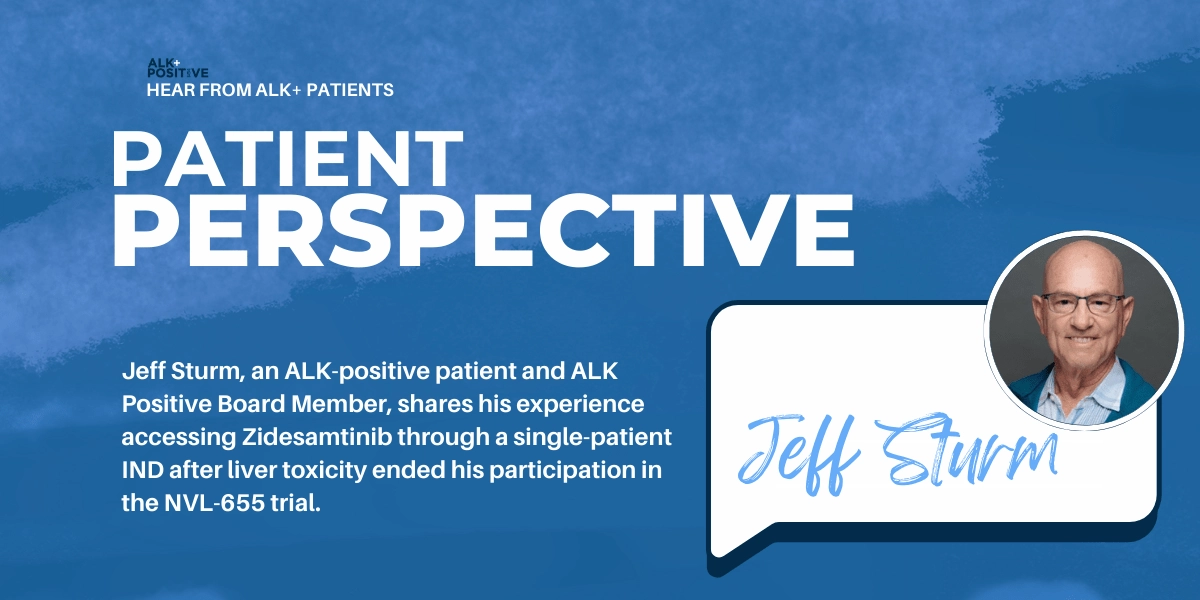
Patient Perspective: Alternative Nuvalent drug for patients disqualified from NVL-655 due to liver toxicity
Jeff Sturm shares his experience accessing the investigational drug zidesamtinib through a single-patient IND after discontinuing the NVL-655 trial due to liver toxicity. His story highlights how physicians, researchers, and companies sometimes work together to explore additional options for patients.
-
True or False: Test Your Knowledge of Clinical Trials
Clinical trials are often misunderstood. This short quiz explores common myths and facts about trials, helping patients better understand participation, safety, and the role research plays in improving outcomes for ALK-positive cancers.
-
A Study of Gilteritinib in Adults with Advanced ALK-Positive Non-small Cell Lung Cancer (NSCLC) Sponsored by Astellas
This trial is for patients progressing on >1 prior ALK inhibitor with measurable, locally advanced or metastatic, ALK-positive non-small cell lung cancer who have experienced alectinib as their only prior ALK inhibitor regimen, or have received lorlatinib as one of their prior ALK inhibitor regimens.
-

Clinical Trial Spotlight: Recruiting for Early-Stage ALK-Positive Lung Cancer
For years, people with ALK-positive lung cancer have faced a frustrating reality: while targeted therapies have transformed outcomes for stage IV disease, treatment for earlier stages has lagged behind. For stage I–III cancers—where surgery, chemo, or radiation may be a cure—there’s been little clarity on whether targeted drugs could reduce recurrence and improve survival.
-

Instructions and Call for Patient Participation in The University of Michigan Judith Tam ALK Lung Cancer Research Initiative
Help Advance Personalized ALK+ Research with the University of Michigan The Judith Tam ALK Lung Cancer Research Initiative at the University of Michigan is leading a groundbreaking effort to better understand and treat ALK-positive non-small cell lung cancer (NSCLC). By collecting patient samples—blood, tumor tissue, and malignant fluid—over time, researchers are building a deep, individualized…
-
Clinical Trial Spotlight: Tumor-Infiltrating Lymphocyte Therapy for ALK-Positive NSCLC at Moffitt Cancer Center
For ALK-positive patients who have progressed after targeted therapy, a new clinical trial at Moffitt Cancer Center offers renewed hope. This Phase 1 study explores an enhanced form of Tumor-Infiltrating Lymphocyte (TIL) therapy—empowering a patient’s own immune cells with a genetic boost to better recognize and fight cancer. With its focus on ALK, EGFR, ROS1,…
-
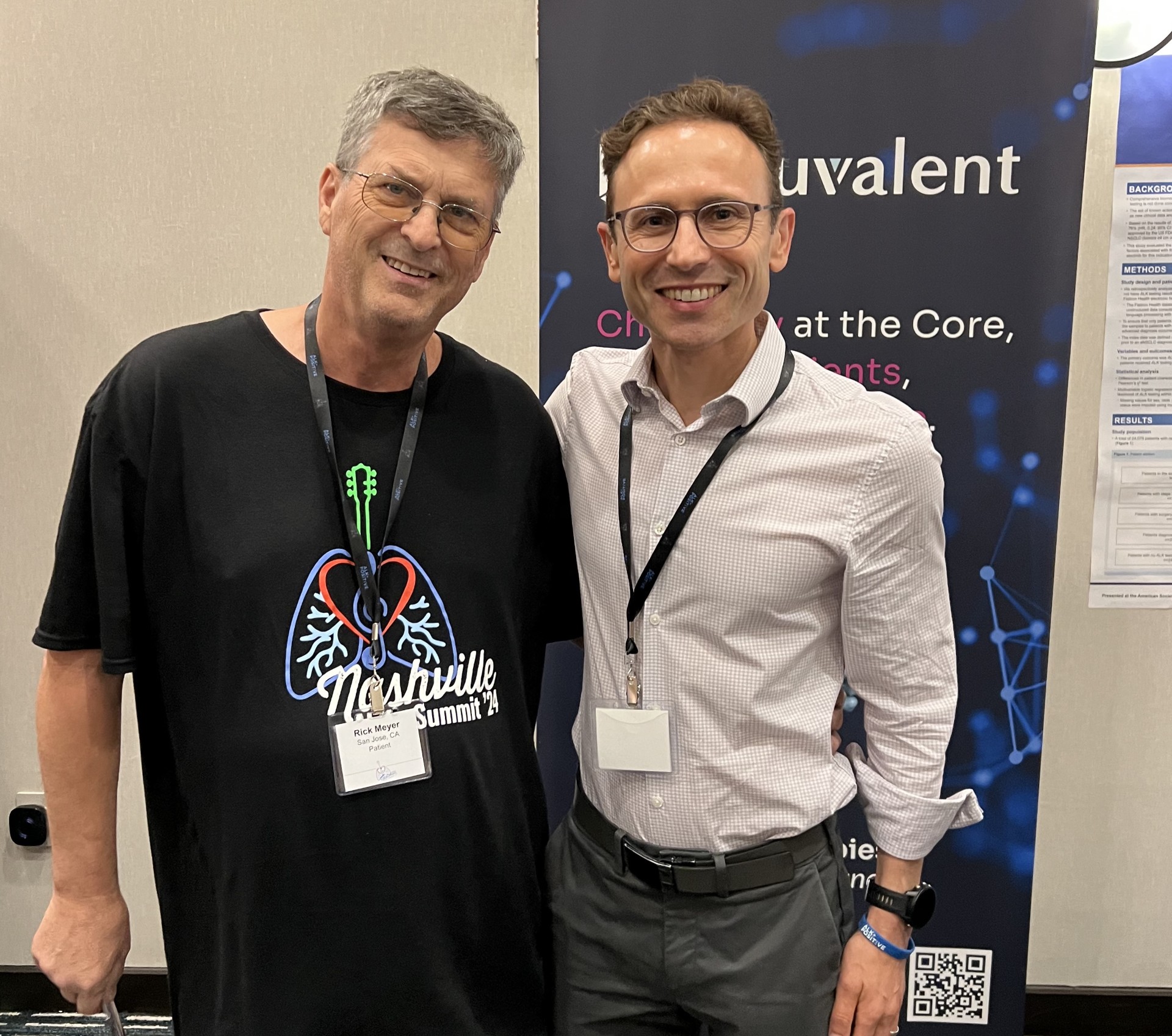
Patient Spotlight: Rick Meyer
We interviewed long term survivor Rick Meyer on his experience with multiple ALK TKIs, his participation in the Nuvalent clinical trial for almost two years and counting, and his overall attitude to life as a thriving ALK patient.
-
Clinical Trials for ALK-positive Cancers – Are They for Me?
Should I enroll in a clinical trial for ALK-positive cancer? The decision to enroll in a clinical trial requires a real understanding of what is being studied and how you
-
Amivantamab With Tyrosine Kinase Inhibitors (TKIs) for Advanced NSCLC With ALK, ROS1, or RET Alterations
Who is this trial for: This trial is for patients with one of three forms of non-small cell lung cancer (NSCLC) – ALK, ROS1, or RET – who are progressing on their current TKI under certain conditions, and are willing to try an experimental drug combination in order to extend the life of their current…
-

Phase II Clinical Trial NCT05384626 by Nuvalent, Inc. A Study of NVL-655 in Patients with Advanced NSCLC and Other Solid Tumors Harboring ALK Rearrangement or Activating ALK Mutation (ALKOVE-1)
Who is this trial for: NVL-655 is a 4th generation, brain-penetrant, ALK TKI inhibitor created to overcome several limitations observed with currently available therapies. NVL-655 is designed to have activity in tumors that have developed resistance to first, second, and third-generation ALK inhibitors, including tumors with the solvent front G1202R mutation or compound mutations G1202R/L1196M…
-

ALKOVE-1 Study Results Summary: NVL-655’s Promising Role in Treating Advanced ALK+ Lung Cancer
The clinical results from the Phase 1 portion of the ALKOVE-1 study is bringing new hope to patients with ALK-positive lung cancer, especially those who have exhausted other treatment options. NVL-655, a fourth-generation ALK inhibitor, has shown unique effectiveness in overcoming resistance to previous treatments, including those with brain metastases and specific resistance mutations
-

ALK Clinical Trials September 2024: Should Brain Metastases be Treated with Radiation at Diagnosis in ALK+ Lung Cancer? Research About a Crucial Question
For those facing the challenging diagnosis of ALK-positive lung cancer, brain metastases often pose a serious concern. Research reveals that up to 40% of these patients have brain metastases right from the start. This sets the stage for a critical question in treatment planning: Is it better to tackle these brain metastases with spot radiation,…